


The Complete Restaurant Maintenance Guide for Chicago Restaurants (2026)
Table of Contents
ToggleA structured restaurant maintenance plan protects food safety, equipment reliability, fire prevention, regulatory readiness, facility appearance, and long-term operating performance.
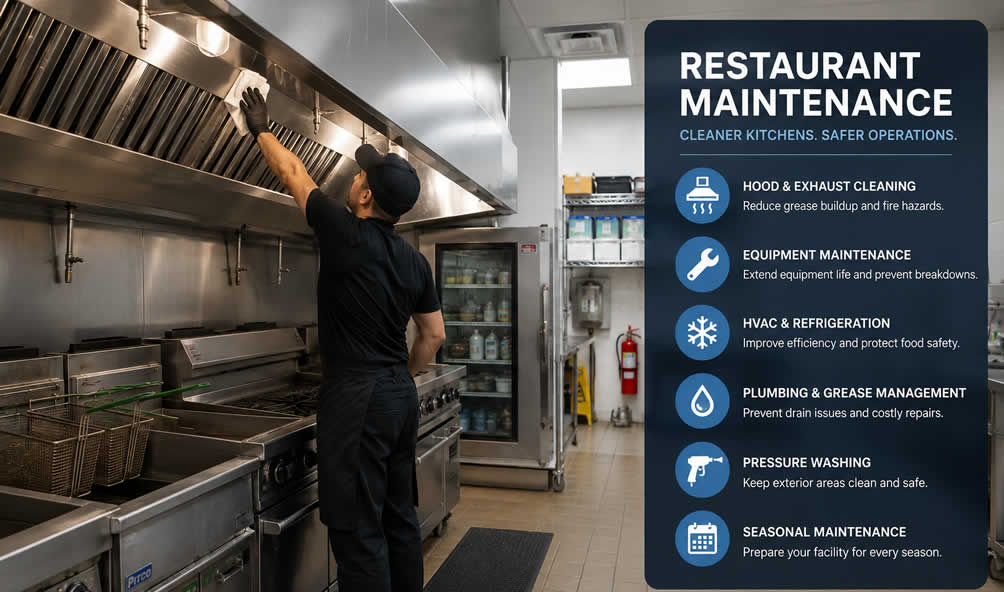
Restaurant maintenance is the structured process of inspecting, cleaning, servicing, and repairing commercial kitchens, food-service equipment, ventilation systems, plumbing, refrigeration, dining areas, and building exteriors.
A preventive maintenance program reduces equipment failures, improves food safety, minimizes fire hazards, extends equipment lifespan, lowers operating costs, and helps Chicago restaurants maintain cleaner and more reliable facilities.
Restaurant Maintenance at a Glance
| Maintenance Area | Primary Objective | Typical Frequency |
|---|---|---|
| Commercial kitchen cleaning | Remove grease, food residue, and surface contamination | Daily and scheduled deep cleaning |
| Hood and exhaust cleaning | Control grease accumulation and support fire prevention | Based on cooking volume and system conditions |
| Equipment maintenance | Improve reliability and extend equipment life | Monthly or manufacturer-directed |
| Refrigeration maintenance | Protect food storage and equipment performance | Daily monitoring and monthly inspection |
| HVAC maintenance | Maintain airflow and indoor comfort | Quarterly or seasonally |
| Pressure washing | Remove exterior grease, dirt, stains, and buildup | Quarterly or as conditions require |
| Plumbing maintenance | Prevent leaks, blockages, and drainage problems | Monthly inspection |
| Dumpster pad cleaning | Control grease, residue, staining, and odors | Monthly or more frequently |
Key Restaurant Maintenance Priorities
Protect Kitchen Operations
- Maintain food-contact and cooking surfaces
- Reduce hidden grease accumulation
- Monitor refrigeration temperatures
- Address equipment problems before failure
Protect the Facility
- Maintain hood and exhaust systems
- Clean drains and grease-management systems
- Service HVAC and refrigeration equipment
- Maintain sidewalks, loading areas, and dumpster pads
What Is Restaurant Maintenance?
Restaurant maintenance is the ongoing management of the equipment, systems, surfaces, and structural areas that allow a commercial kitchen and dining facility to operate safely and reliably.
It extends beyond routine cleaning. Maintenance includes scheduled inspections, preventive servicing, equipment adjustments, repairs, deep cleaning, grease removal, ventilation care, and exterior facility maintenance.
A Complete Restaurant Maintenance Program Includes
- Commercial kitchen cleaning
- Restaurant kitchen degreasing
- Hood cleaning
- Kitchen exhaust cleaning
- Fire-suppression inspections
- HVAC servicing
- Refrigeration maintenance
- Plumbing inspections
- Grease management
- Dining-room maintenance
- Restroom sanitation
- Pressure washing
- Dumpster pad cleaning
- Exterior building maintenance
Consistent preventive maintenance reduces operational interruptions while protecting equipment, employees, customers, and building assets.
Why Preventive Maintenance Is Critical for Chicago Restaurants
Food Safety
Food-preparation areas accumulate grease, moisture, residue, and debris throughout daily operations. Scheduled maintenance controls contamination before it affects critical surfaces.
Fire Prevention
Grease can accumulate inside hood canopies, filters, plenums, ductwork, and exhaust fans. Professional cleaning reduces combustible deposits and supports safer ventilation.
Equipment Reliability
Inspections identify worn seals, damaged filters, declining thermostats, restricted airflow, and loose connections before equipment failure interrupts service.
Lower Operating Costs
Dirty coils, clogged filters, grease-covered fans, and neglected equipment increase system stress and energy use. Preventive care protects long-term efficiency.
Health Inspection Readiness
A documented cleaning and maintenance program creates consistent accountability. It also helps restaurant managers identify sanitation, equipment, plumbing, and facility issues before they affect operations or inspections.
Restaurant Maintenance Schedule: Daily, Weekly, Monthly, and Annual Tasks
Daily Restaurant Maintenance Checklist
- Sanitize food-contact surfaces
- Clean grills, fryers, ovens, and ranges
- Remove grease from cooking areas
- Empty grease and waste containers
- Sweep and mop kitchen floors
- Clean and inspect floor drains
- Sanitize preparation tables
- Verify refrigeration temperatures
- Inspect walk-in coolers and freezers
- Clean dining tables and seating
- Inspect and sanitize restrooms
- Remove spills immediately
Daily maintenance prevents grease, food residue, moisture, and waste from developing into larger sanitation and equipment problems.
Weekly Restaurant Maintenance Checklist
- Deep clean cooking equipment
- Degrease stainless steel surfaces
- Clean behind movable equipment
- Wash walls near cooking lines
- Inspect hood filters
- Clean storage shelving
- Flush and inspect floor drains
- Inspect plumbing connections
- Verify lighting performance
- Remove dust from ceilings and vents
- Clean service and loading areas
- Inspect dumpster pad conditions
Monthly, Quarterly, and Annual Schedule
| Frequency | Recommended Activities |
|---|---|
| Monthly | Commercial kitchen deep cleaning, refrigeration inspections, plumbing checks, grease-management review, floor and grout cleaning, and equipment inspection. |
| Quarterly | HVAC servicing, exterior pressure washing, dumpster pad cleaning, loading-dock cleaning, roof and drainage review, and electrical inspections. |
| Annually | Comprehensive facility assessment, fire-suppression inspection, major equipment servicing, roofing review, exterior maintenance, and complete documentation audit. |
Hidden Problems Found During Commercial Kitchen Maintenance
Routine employee cleaning often addresses visible surfaces. Professional maintenance focuses on less accessible areas where grease, moisture, residue, and equipment problems remain unnoticed.
Frequently Identified Conditions
- Heavy grease accumulation behind fryers
- Oil buildup beneath grills and cooking lines
- Blocked or slow floor drains
- Dirty refrigeration condenser coils
- Damaged refrigerator door gaskets
- Grease inside exhaust plenums
- Loose or incorrectly seated hood filters
- Grease contamination inside duct transitions
- Standing water beneath dishwashing equipment
- Food residue inside wall-to-floor junctions
These conditions increase sanitation concerns, equipment stress, energy consumption, repair costs, and operational risk.
Commercial Kitchen Deep Cleaning Reaches Beyond Daily Cleaning
Commercial kitchen deep cleaning removes grease, food residue, carbon buildup, oil film, and contaminants from areas that routine daily cleaning cannot adequately reach.
Cooking and Equipment Areas
- Equipment degreasing
- Behind-equipment sanitation
- High-temperature grease removal
- Stainless steel cleaning
- Hard-to-reach surface cleaning
Structural Kitchen Areas
- Wall and ceiling cleaning
- Tile and grout restoration
- Floor and drain cleaning
- Vent-area cleaning
- Hood exterior cleaning
Restaurants requiring deeper grease and contamination removal can incorporate professional commercial kitchen cleaning services in Chicago into a recurring maintenance schedule.
Hood and Kitchen Exhaust Maintenance Controls Grease Buildup
Kitchen exhaust systems remove heat, smoke, odors, moisture, and grease-laden vapors generated during cooking. Grease gradually accumulates throughout the system and can restrict airflow when maintenance is delayed.
Professional Hood Maintenance May Include
- Hood canopy cleaning
- Grease filter cleaning or replacement
- Plenum cleaning
- Interior duct cleaning
- Exhaust fan cleaning
- Fan hinge inspection
- Grease containment inspection
- Belt and motor inspection
- Airflow evaluation
- Access-panel inspection
Cleaning frequency depends on cooking volume, appliance type, menu, fuel source, grease production, and the condition of the exhaust system. Restaurants should use documented inspection and cleaning schedules rather than waiting for visible grease to become severe.
Related services include commercial hood cleaning and kitchen exhaust cleaning in Chicago .
Maintain HVAC, Refrigeration, Plumbing, and Grease Systems
HVAC and Refrigeration
- Replace HVAC filters
- Clean evaporator and condenser coils
- Inspect refrigeration door gaskets
- Verify thermostat calibration
- Inspect rooftop HVAC units
- Monitor walk-in temperatures
- Check make-up air performance
Plumbing and Grease Management
- Clean floor drains
- Inspect sinks and faucets
- Identify leaks
- Service grease traps
- Inspect drain lines
- Verify water pressure
- Inspect hot-water systems
Restricted airflow, dirty condenser coils, damaged door seals, slow drains, and neglected grease systems increase costs and raise the likelihood of unexpected operational interruptions.
Exterior Pressure Washing Protects Safety and Curb Appeal
Restaurant maintenance does not stop at the kitchen door. Sidewalks, entrances, patios, service areas, loading docks, parking surfaces, and dumpster enclosures accumulate grease, oil, gum, food residue, algae, dirt, and environmental pollutants.
Restaurant Exterior Areas That Require Maintenance
- Sidewalks
- Building entrances
- Outdoor dining patios
- Loading docks
- Dumpster enclosures
- Parking lots
- Drive-thru lanes
- Service entrances
- Concrete walkways
- Exterior walls and facades
Professional commercial pressure washing removes difficult buildup, supports a cleaner exterior environment, and helps protect concrete, masonry, and other building materials.
Chicago Restaurants Need a Seasonal Maintenance Plan
Chicago's temperature changes, winter weather, road salt, summer heat, moisture, and seasonal outdoor dining create different facility priorities throughout the year.
Spring Maintenance
- Pressure wash exterior surfaces
- Remove winter salt residue
- Inspect roofs and drainage systems
- Service HVAC equipment
- Prepare outdoor dining areas
Summer Maintenance
- Monitor refrigeration performance
- Increase HVAC inspections
- Clean outdoor seating areas
- Inspect condenser units
- Remove exterior grease deposits
Fall Maintenance
- Service heating systems
- Inspect roof drains
- Remove leaves from drainage areas
- Prepare plumbing for freezing weather
- Clean gutters and downspouts
Winter Maintenance
- Remove snow and ice from entrances
- Monitor exposed water lines
- Inspect entry mats
- Protect exterior plumbing
- Verify heating performance
Preventive Maintenance vs. Reactive Restaurant Repairs
| Preventive Maintenance | Reactive Repairs |
|---|---|
| Scheduled inspections and servicing | Repairs performed after equipment failure |
| Better control of long-term costs | Higher emergency repair expenses |
| Longer equipment service life | Premature replacement of equipment |
| Reduced operational downtime | Unexpected business interruptions |
| Improved efficiency and performance | Higher energy use and system stress |
| Consistent maintenance documentation | Limited maintenance records |
Common Restaurant Maintenance Mistakes
Problems That Increase Repair and Cleaning Costs
- Cleaning only visible surfaces
- Ignoring grease behind cooking equipment
- Delaying hood and exhaust cleaning
- Skipping refrigeration maintenance
- Neglecting condenser coil cleaning
- Ignoring slow or contaminated floor drains
- Waiting for equipment failure before servicing
- Failing to inspect rooftop HVAC units
- Delaying grease-trap maintenance
- Overlooking dumpster pad sanitation
Correcting these maintenance gaps reduces emergency repairs and creates more consistent restaurant operations.
Restaurant maintenance combines scheduled inspections, commercial kitchen cleaning, equipment servicing, hood cleaning, kitchen exhaust maintenance, refrigeration inspections, HVAC servicing, plumbing maintenance, pressure washing, and preventive facility care.
A documented maintenance schedule improves sanitation, equipment performance, facility protection, operational reliability, and long-term cost control.
Frequently Asked Questions About Restaurant Maintenance
What is restaurant maintenance?
Restaurant maintenance is the scheduled inspection, cleaning, servicing, and repair of commercial kitchens, equipment, building systems, dining areas, and exterior facilities.
Why is preventive maintenance important for restaurants?
Preventive maintenance reduces equipment failures, controls repair costs, extends equipment lifespan, supports sanitation, and minimizes unexpected operational downtime.
How often should a commercial kitchen be deep cleaned?
Deep-cleaning frequency depends on cooking volume, menu type, grease production, equipment configuration, and daily operating hours. High-volume restaurants generally require more frequent professional deep cleaning.
How often should restaurant hoods be cleaned?
Hood-cleaning frequency should be determined by cooking volume, fuel type, menu, grease production, system condition, and applicable inspection requirements.
Which restaurant areas require routine maintenance?
Restaurants should maintain kitchens, hood systems, exhaust ducts, cooking equipment, refrigeration, HVAC, plumbing, grease systems, dining rooms, restrooms, dumpster pads, loading docks, sidewalks, parking areas, and building exteriors.
Does pressure washing support restaurant maintenance?
Yes. Pressure washing removes grease, oil, gum, dirt, algae, food residue, and environmental buildup from exterior restaurant surfaces and service areas.
Why is seasonal maintenance important in Chicago?
Chicago weather affects HVAC systems, refrigeration, plumbing, roofs, entrances, sidewalks, parking areas, outdoor dining spaces, and exterior surfaces. Seasonal inspections help reduce weather-related damage.
A Structured Maintenance Plan Protects the Entire Restaurant
Restaurant maintenance is a comprehensive operational strategy that integrates commercial kitchen cleaning, preventive equipment servicing, hood and exhaust maintenance, refrigeration inspections, HVAC care, plumbing management, pressure washing, and scheduled facility inspections.
For restaurants throughout Chicago, preventive maintenance provides a systematic method for reducing emergency repairs, controlling grease buildup, maintaining cleaner commercial kitchens, improving equipment reliability, and protecting long-term investments in the property and its operating systems.
A documented schedule organized around daily, weekly, monthly, quarterly, seasonal, and annual service intervals creates a cleaner, safer, and more reliable restaurant facility.
Professional Restaurant Cleaning and Facility Maintenance
Clean Wash Remove provides commercial kitchen cleaning, kitchen degreasing, hood and exhaust cleaning, pressure washing, and restaurant facility cleaning throughout Chicago and surrounding communities.
Request Restaurant Cleaning Service