


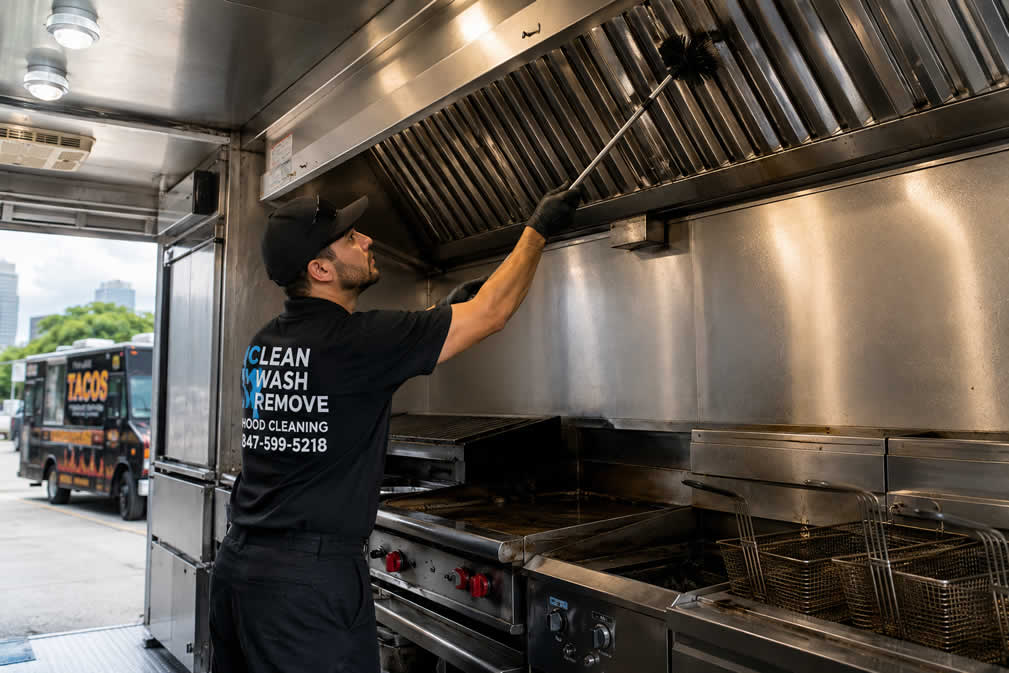
Food Truck Hood Cleaning: What Makes Mobile Kitchens Different?
Table of Contents
ToggleFood trucks use compact commercial kitchens that produce grease, smoke, and heat just like traditional restaurants. That means their hood and exhaust systems require consistent professional cleaning.
Food trucks have become one of the fastest-growing parts of the food-service industry. Although they operate in a much smaller space than a traditional restaurant, they still generate grease-laden vapors, smoke, and heat that must be safely exhausted through a commercial hood system.
Many food truck owners assume their exhaust system does not need the same level of maintenance as a restaurant. In reality, food trucks face many of the same fire risks—and sometimes even greater challenges because of their compact design and concentrated cooking activity.
What Is the Same?
Whether you operate a food truck or a brick-and-mortar restaurant, the purpose of the exhaust system is the same.
- Remove grease-laden vapors produced during cooking
- Vent smoke and heat safely outside
- Reduce the risk of dangerous grease fires
- Support proper airflow and ventilation
- Help meet fire-safety and health-code requirements
- Protect employees, equipment, and the mobile kitchen
Grease does not care whether cooking happens inside a restaurant kitchen or a food truck. Every burger, basket of fries, barbecue order, or piece of fried chicken produces grease that can accumulate inside the hood, filters, ductwork, and exhaust fan.
What Makes Food Truck Hood Cleaning Different?
The cleaning principles are similar, but mobile kitchens create unique access, heat, and maintenance challenges.
Smaller Does Not Mean Cleaner
Food truck exhaust systems are compact, but they can accumulate grease quickly because high-volume cooking takes place in a confined space with limited ventilation.
Limited Access
Food trucks have tight working areas. Reaching the hood, ductwork, filters, and exhaust fan may require specialized tools and careful cleaning techniques.
Mobile Equipment
Travel vibrations may loosen grease deposits and affect components. Routine inspections can help identify loose parts, worn seals, or other concerns before they grow.
Higher Heat Concentration
Small kitchens concentrate heat and grease in a limited area, making clean exhaust components especially important for proper airflow and reduced fire risk.
How Often Should a Food Truck Hood Be Cleaned?
Cleaning frequency depends on the menu, the amount of frying, cooking volume, and how often the truck operates.
| Cooking Activity | General Cleaning Frequency | Typical Examples |
|---|---|---|
| Heavy frying or high-volume cooking | Every 1–3 months | Fried chicken, fries, burgers, barbecue, heavy grease production |
| Moderate cooking | Approximately every 3 months | Mixed menus, moderate daily service, limited frying |
| Light-duty cooking | Approximately every 6 months | Low-grease cooking, limited operating hours, lighter menu items |
What Is Included in Professional Food Truck Hood Cleaning?
A complete food truck hood-cleaning service should address the accessible components where grease and cooking residue accumulate.
- Cleaning the hood interior and exterior
- Degreasing and washing removable baffle filters
- Cleaning accessible ductwork
- Cleaning exhaust fan housing and fan blades
- Removing grease from accessible system surfaces
- Completing a final visual inspection
The objective is to remove combustible grease deposits and restore accessible metal surfaces as thoroughly as practical, following professional industry cleaning practices.
Why Professional Cleaning Matters
Routine professional cleaning supports safer, more efficient mobile kitchen operations.
Food Truck Hood Cleaning by Clean Wash Remove
Clean Wash Remove provides commercial kitchen exhaust cleaning for restaurants, food trucks, trailers, and mobile catering kitchens throughout the Chicago area.
Our technicians understand the limited access, concentrated grease, and compact equipment layouts found in mobile kitchens. We clean accessible hood, filter, duct, and exhaust-fan components with the same attention to detail used in traditional commercial kitchens.
Schedule Your Food Truck Hood Cleaning
Routine hood and exhaust cleaning protects your equipment, supports safer operation, and gives you greater peace of mind every time you start cooking.