Professional Restaurant Cleaning Services in Chicago
Comprehensive cleaning programs for commercial kitchens, food preparation areas, dining rooms, cooking equipment, restrooms, storage areas, employee workspaces and restaurant exteriors.
A Complete Cleaning Program for Your Restaurant
Restaurant cleaning services are professional cleaning solutions developed to maintain commercial kitchens, dining areas, food preparation stations, cooking equipment, storage rooms, employee workspaces, restrooms and exterior restaurant surfaces.
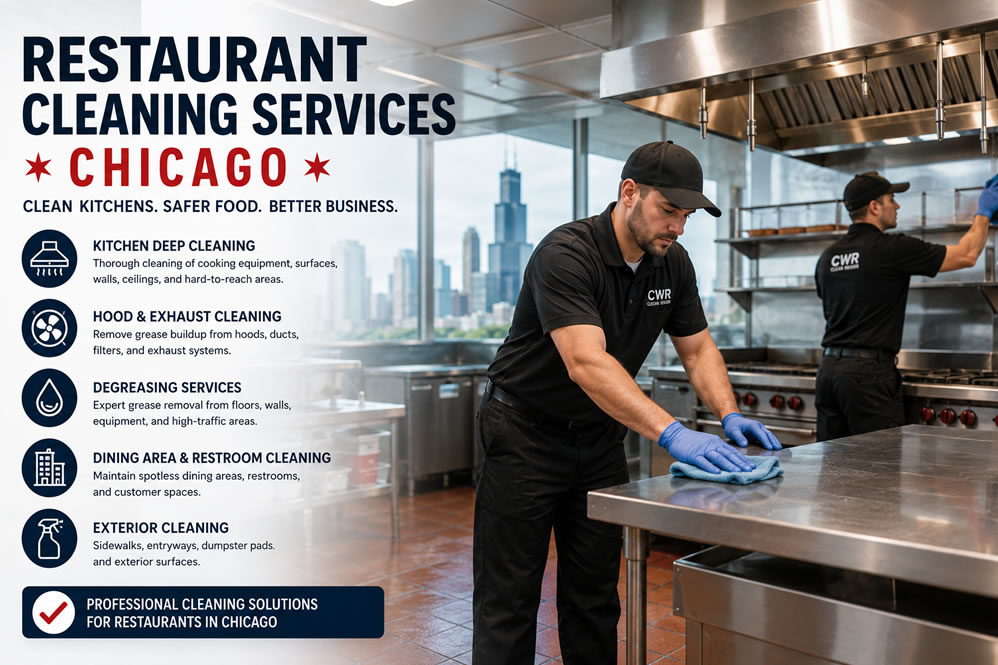
Professional restaurant cleaning programs combine commercial kitchen cleaning, restaurant kitchen degreasing, commercial kitchen deep cleaning, hood cleaning, kitchen exhaust cleaning, dining area cleaning, restroom cleaning and exterior pressure washing.
Each cleaning program can be adapted to the facility’s size, operating schedule, cooking volume, equipment and maintenance requirements.
What Are Restaurant Cleaning Services?
Specialized commercial cleaning services designed for the demanding conditions found in restaurants and food service facilities.
Commercial Kitchen Cleaning
Cleaning for food preparation stations, cooking equipment, floors, walls, ceilings, drains, storage spaces and kitchen work surfaces.
Learn More →Commercial Kitchen Deep Cleaning
Detailed cleaning for heavy grease accumulation, hidden residue, equipment areas and other difficult-to-reach kitchen surfaces.
Learn More →Restaurant Kitchen Degreasing
Targeted grease removal for cooking lines, fryers, grills, stainless steel equipment, walls, floors and preparation stations.
Learn More →Hood and Exhaust Cleaning
Specialized cleaning for kitchen hoods, exhaust fans, ductwork, access panels and grease-affected exhaust system components.
Learn More →Dining and Restroom Cleaning
Maintenance for tables, chairs, floors, windows, waiting areas, fixtures, mirrors and other customer-facing restaurant spaces.
Request Service →Restaurant Exterior Cleaning
Pressure washing and exterior cleaning for sidewalks, patios, entrances, walls, loading areas and dumpster pads.
Learn More →Businesses That Require Restaurant Cleaning Services
Restaurant Cleaning Challenges
Busy food service environments develop residue and buildup that often require structured maintenance and specialized cleaning.
Restaurant Cleaning Services by Area
Different parts of a restaurant require different cleaning procedures, equipment and maintenance schedules.
Commercial Kitchen Cleaning
Commercial kitchen cleaning focuses on food preparation stations, cooking equipment, floors, walls, ceilings, drains, storage areas and work surfaces.
- Preparation stations
- Cooking equipment
- Floors and walls
- Drains
- Storage areas
Restaurant Kitchen Degreasing
Restaurant kitchen degreasing removes grease buildup from cooking lines, fryers, grills, stainless steel equipment, walls, floors and food preparation stations.
- Cooking lines
- Fryers and grills
- Stainless steel
- Kitchen floors
- Wall surfaces
Commercial Kitchen Deep Cleaning
Commercial kitchen deep cleaning addresses heavy buildup, hidden residue and hard-to-reach areas requiring more detailed attention.
- Floor degreasing
- Wall cleaning
- Ceiling cleaning
- Equipment detailing
- Drain cleaning
Hood and Kitchen Exhaust Cleaning
Restaurant exhaust systems require specialized cleaning for components affected by airborne grease and cooking residue.
- Hood cleaning
- Duct cleaning
- Exhaust fans
- Access panels
- Grease removal
Dining Area and Restroom Cleaning
Customer-facing cleaning includes dining room surfaces, entryways, waiting areas and restroom fixtures.
- Tables and chairs
- Floors
- Windows
- Fixtures and mirrors
- Consumable replenishment
Restaurant Exterior Cleaning
Exterior cleaning helps maintain restaurant entrances, patios, sidewalks, service areas and other high-visibility surfaces.
- Sidewalk cleaning
- Building washing
- Patio cleaning
- Dumpster pads
- Pressure washing
Benefits of Professional Restaurant Cleaning
Structured cleaning programs support cleaner work environments, customer-facing areas and restaurant facilities.
Restaurant Cleaning Before Health Inspections
Restaurants commonly increase cleaning activities before scheduled inspections. However, recurring maintenance can help prevent the need for rushed, last-minute cleaning.
A structured program can address kitchen surfaces, equipment, floors, exhaust components, storage areas and food preparation spaces according to the facility’s needs.
View Health Inspection Cleaning Requirements →Inspection Preparation May Include
- Commercial kitchen cleaning
- Restaurant kitchen degreasing
- Commercial kitchen deep cleaning
- Hood and kitchen exhaust cleaning
- Cooking equipment detailing
- Floor and drain cleaning
- Food preparation area cleaning
- Storage area organization
Restaurant Cleaning vs. Other Cleaning Services
Restaurant cleaning covers more specialized surfaces and operational areas than standard building cleaning.
Restaurant Cleaning vs. Commercial Kitchen Cleaning
Commercial kitchen cleaning focuses primarily on cooking equipment, preparation stations, kitchen surfaces and grease removal.
Complete restaurant cleaning includes the entire facility:
- Commercial kitchens
- Dining rooms
- Restrooms
- Employee workspaces
- Storage rooms
- Entryways and exterior surfaces
Restaurant Cleaning vs. General Janitorial Services
General janitorial services typically focus on office spaces, common areas and routine building maintenance.
Restaurant cleaning requires specialized attention for:
- Commercial food service environments
- Grease removal
- Cooking equipment
- Food preparation stations
- Kitchen floors and drains
- Hood and exhaust systems
Restaurant Cleaning Service Cost Factors
The scope and cost of professional restaurant cleaning depend on the facility, service requirements and existing conditions.
Restaurants requiring deep cleaning, kitchen degreasing, hood cleaning or exhaust system cleaning generally need a broader maintenance scope than facilities requiring routine surface cleaning.
Related Commercial Kitchen Cleaning Services
Explore specialized services and resources that support a complete restaurant maintenance program.
Restaurant Cleaning Services Throughout Chicago
Professional restaurant cleaning programs are available for independent restaurants, franchise locations, hotel kitchens, cafeterias, catering companies, institutional dining facilities and food production operations throughout Chicago and surrounding communities.
Complete Facility Cleaning for Chicago Restaurants
Restaurant cleaning services combine commercial kitchen cleaning, restaurant kitchen degreasing, commercial kitchen deep cleaning, hood cleaning, kitchen exhaust cleaning, dining area cleaning, restroom cleaning, dumpster pad cleaning and exterior pressure washing into a comprehensive maintenance program.
These programs help restaurants, hotels, cafeterias, healthcare kitchens, catering companies, institutional dining facilities and food production operations maintain cleaner kitchens, customer areas, food preparation stations and restaurant facilities.
Need Professional Restaurant Cleaning?
Tell us about your restaurant, commercial kitchen or food service facility. We will help you determine the appropriate cleaning scope for your operation.
Frequently Asked Questions About Restaurant Cleaning Services
Expert answers about commercial restaurant cleaning, commercial kitchen maintenance, hood cleaning, deep cleaning, degreasing, and facility cleaning throughout Chicago.
What are restaurant cleaning services?
Restaurant cleaning services are professional cleaning programs that maintain commercial kitchens, dining areas, food preparation stations, cooking equipment, storage rooms, employee workspaces, restrooms, and exterior restaurant surfaces.
What is included in restaurant cleaning services?
Services commonly include commercial kitchen cleaning, commercial kitchen deep cleaning, restaurant kitchen degreasing, hood cleaning, kitchen exhaust cleaning, dining room cleaning, restroom cleaning, dumpster pad cleaning, and exterior pressure washing.
What areas are cleaned during restaurant cleaning services?
Restaurant cleaning commonly includes kitchens, food preparation stations, dining rooms, storage rooms, employee areas, restrooms, entryways, sidewalks, patios, and exterior restaurant surfaces.
What is the difference between restaurant cleaning and commercial kitchen cleaning?
Commercial kitchen cleaning focuses on food preparation areas and cooking equipment, while restaurant cleaning services include the entire restaurant facility, including customer-facing areas and exterior spaces.
Does restaurant cleaning include hood cleaning?
Professional hood cleaning is typically performed as a specialized service within a broader restaurant maintenance program.
How often should restaurants be professionally cleaned?
Cleaning frequency depends on cooking volume, customer traffic, grease production, operational hours, equipment usage, and maintenance requirements.
What affects restaurant cleaning requirements?
Restaurant size, menu type, cooking volume, equipment quantity, grease accumulation, customer traffic, cleaning scope, and facility layout all influence cleaning requirements.
What businesses benefit from restaurant cleaning services?
Restaurants, hotel kitchens, cafeterias, bars, breweries, healthcare kitchens, schools, catering companies, food production facilities, and institutional dining operations commonly utilize professional restaurant cleaning services.
Get A Free Commercial Cleaning Quote Today
Commercial Kitchen Cleaning • Hood Cleaning • Pressure Washing • Building Washing
📞 Call Now: (630) 418-6276Commercial Kitchen Cleaning Service Areas in Chicago
Clean Wash Remove serves restaurants, hotels, cafeterias, commissary kitchens, and food-service facilities across Chicago.
Top 10 Restaurants in Naperville, IL That Depend on Professional Commercial Kitchen Maintenance
| Rank | Restaurant | Location | Why It Fits | Website |
|---|---|---|---|---|
| 1 | Mesón Sabika | Naperville, IL | High-volume Spanish dining and events operation requiring reliable kitchen maintenance. | Visit Website |
| 2 | Cooper’s Hawk Winery & Restaurant | Naperville, IL | Large hospitality concept with extensive food preparation and service operations. | Visit Website |
| 3 | Sullivan’s Steakhouse | Naperville, IL | Premium steakhouse operation where kitchen performance and consistency are critical. | Visit Website |
| 4 | Quiubo | Downtown Naperville | Modern Mexican concept with active commercial kitchen workflows. | Visit Website |
| 5 | Catch 35 | Naperville, IL | Seafood-focused restaurant emphasizing consistent back-of-house standards. | Visit Website |
| 6 | Hugo’s Frog Bar & Fish House | Naperville, IL | Established hospitality venue supporting continuous kitchen activity. | Visit Website |
| 7 | The White Chocolate Grill | Naperville, IL | Busy full-service restaurant with steady dining volume and kitchen demand. | Visit Website |
| 8 | Empire Burgers + Brew | Naperville, IL | High-turnover restaurant concept where routine maintenance supports operations. | Visit Website |
| 9 | Vasili’s | Naperville, IL | Contemporary Mediterranean restaurant with professional food-service standards. | Visit Website |
| 10 | SixtyFour – Wine Bar & Kitchen | Naperville, IL | Upscale restaurant operation focused on consistent guest and kitchen performance. | Visit Website |
Commercial Kitchen Services Across Chicagoland
Support a cleaner, safer, and more efficient commercial kitchen with professional deep cleaning and routine kitchen cleaning services across Chicagoland locations.
| Service Area | Service Type | Page |
|---|---|---|
| Lisle | Commercial Kitchen Deep Cleaning | Commercial Kitchen Deep Cleaning Services in Lisle |
| Chicago | Commercial Kitchen Cleaning | Commercial Kitchen Cleaning Services in Chicago |
| Aurora | Commercial Kitchen Cleaning | Commercial Kitchen Cleaning Services in Aurora |
We Also Serve in:
TESTIMONIALS
EXCELLENTTrustindex verifies that the original source of the review is Google. Brad and his team were fantastic Great job they were fast and on time Thanks ScottPosted on GoogleTrustindex verifies that the original source of the review is Google. Amazing job cleaning the hood and restaurant!! the place looks BRAND NEW :) and the price was so much better than any of the competition.!! Thank you Brad!Posted on GoogleTrustindex verifies that the original source of the review is Google. They Did an Amazing job Pressure washing the exterior of the building and parking Lot!!!! Brad is an amazing guy to work with :)Posted on GoogleTrustindex verifies that the original source of the review is Google. High quality work with attention to detail. Easy to work with and schedule.Posted on GoogleTrustindex verifies that the original source of the review is Google. Great guys very professional !!!Posted on GoogleTrustindex verifies that the original source of the review is Google. Wasn't too happy with my last hood cleaner. Brad came in, gave me a quote, two days later did the job! Felt like the last company was getting comfortable, rushing and not focusing on the little details. Not these guys! Thank you Brad
Want to Contact with us?