


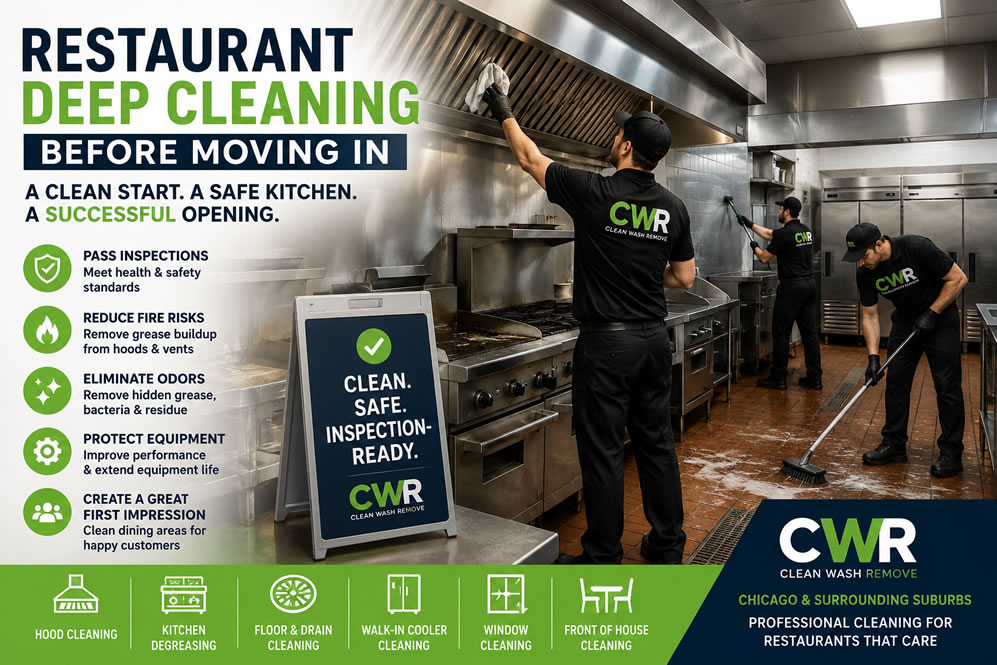
Restaurant Deep Cleaning Before Moving In: Why It Matters More Than You Think
Table of Contents
ToggleOpening a restaurant is one of the most exciting milestones for any business owner. Whether you’re taking over a former restaurant space, converting a commercial property into a dining establishment, or purchasing an existing restaurant, there is one critical step that should never be overlooked before opening your doors: a professional restaurant deep cleaning.
Many new restaurant owners assume that because the previous tenant operated a food business, the kitchen and dining areas are already clean and ready for use. Unfortunately, that is rarely the case. Hidden grease, accumulated grime, neglected exhaust systems, bacteria buildup, and overlooked sanitation issues can create serious health, safety, and operational problems.
At Clean Wash Remove (CWR), we specialize in restaurant deep cleaning services throughout Chicago and the surrounding suburbs. We help restaurant owners start with a clean, safe, and inspection-ready facility before they begin operations.
Why Deep Cleaning Is Essential Before Moving Into a Restaurant
Even if a restaurant appears clean on the surface, years of grease, food residue, dust, and contaminants can remain hidden behind equipment, inside exhaust systems, under appliances, and in hard-to-reach areas.
A comprehensive deep cleaning serves several important purposes:
1. Pass Health Department Inspections
Before opening, many municipalities require inspections to ensure the facility meets sanitation standards.
Inspectors often check:
- Floors and floor drains
- Walls and ceilings
- Cooking equipment
- Hood systems
- Grease buildup
- Food preparation areas
- Walk-in coolers and freezers
- Restrooms
- Storage areas
A professional deep cleaning helps eliminate issues that could delay permits or opening dates.
2. Create a Safe Working Environment
Grease buildup is one of the leading causes of kitchen fires.
Years of accumulated grease can be found:
- Behind cooking equipment
- Under fryers
- Inside exhaust hoods
- In ductwork
- Around fans and ventilation systems
Removing this buildup significantly reduces fire risks while creating a safer environment for employees and customers.
3. Eliminate Odors
Many restaurant spaces carry lingering odors from previous operations.
Common sources include:
- Grease accumulation
- Dirty floor drains
- Walk-in coolers
- Exhaust systems
- Mold or mildew growth
- Food residue hidden behind equipment
Deep cleaning removes the source of odors rather than simply masking them.
4. Protect Your Equipment Investment
Commercial kitchen equipment is expensive.
When grease, dirt, and debris accumulate on equipment, it can:
- Reduce efficiency
- Increase energy costs
- Cause overheating
- Shorten equipment lifespan
- Increase maintenance expenses
A deep cleaning helps ensure your equipment starts operating at peak performance.
Areas That Should Be Deep Cleaned Before Opening
Many new owners focus only on visible surfaces. However, the most important cleaning often happens behind the scenes.
Kitchen Equipment
Commercial cooking equipment should be thoroughly cleaned inside and out.
This includes:
- Fryers
- Grills
- Ovens
- Ranges
- Flat tops
- Steam tables
- Prep stations
- Refrigeration units
Grease and food residue can accumulate in areas that are difficult to reach during daily cleaning.
Walls and Ceilings
Walls and ceilings absorb grease vapors over time.
Without proper cleaning, these surfaces can:
- Harbor bacteria
- Produce odors
- Create an unprofessional appearance
- Fail inspections
Professional degreasing restores these surfaces and improves overall cleanliness.
Floors
Restaurant floors endure years of heavy use.
Deep cleaning should address:
- Tile surfaces
- Concrete floors
- Grout lines
- Floor drains
- Corners and edges
- Under equipment
Grease-covered floors create slip hazards and sanitation concerns.
Floor Drains
Floor drains are often overlooked but can be a major source of odors and bacteria.
A proper deep cleaning includes:
- Debris removal
- Degreasing
- Flushing
- Sanitizing
This helps eliminate unpleasant smells and improves drainage performance.
Walk-In Coolers and Freezers
Walk-ins frequently contain hidden contamination.
Areas requiring attention include:
- Shelving
- Floors
- Walls
- Ceiling panels
- Door seals
- Evaporator areas
Cleaning these spaces before stocking inventory helps prevent contamination.
The Importance of Hood Cleaning Before Opening
One of the most critical components of any restaurant deep clean is the kitchen exhaust system.
Many restaurant owners inherit hood systems that have not been properly maintained.
Professional hood cleaning should include:
- Hood canopy cleaning
- Filter cleaning
- Plenum cleaning
- Duct cleaning (accessible areas)
- Exhaust fan cleaning
Removing grease from these areas helps ensure compliance with NFPA 96 fire safety standards while improving airflow throughout the kitchen.
At CWR, our hood cleaning services are designed to restore systems to bare metal condition whenever possible and provide documentation upon request.
Front-of-House Deep Cleaning
The customer experience begins long before food reaches the table.
Dining areas should be professionally cleaned to create a welcoming environment.
Seating Areas
Deep cleaning includes:
- Tables
- Chairs
- Booths
- Baseboards
- Decorative surfaces
Removing years of buildup improves appearance and sanitation.
Windows
Interior and exterior windows should be professionally cleaned to:
- Improve natural light
- Enhance curb appeal
- Create a cleaner dining environment
First impressions matter, especially for new restaurants trying to establish their reputation.
Restrooms
Customers often judge cleanliness by restroom conditions.
Deep cleaning should include:
- Fixtures
- Walls
- Floors
- Partitions
- Vents
- Grout lines
A spotless restroom sends a strong message about your overall standards.
Common Problems Found During Move-In Cleanings
Over the years, our team has discovered numerous hidden issues during restaurant turnover projects.
Some common findings include:
Hidden Grease Deposits
Grease often accumulates:
- Behind equipment
- Under shelving
- Inside wall penetrations
- Around utility connections
These areas frequently go untouched for years.
Pest Evidence
Food residue and grease buildup can attract pests.
Deep cleaning helps identify and eliminate conditions that may encourage pest activity.
Mold and Mildew
Moisture-prone environments can develop mold growth in:
- Walk-ins
- Storage areas
- Ceiling tiles
- Around plumbing fixtures
Professional cleaning helps address these concerns before opening.
Neglected Exhaust Systems
Many restaurant owners are surprised by the condition of inherited hood systems.
Heavy grease accumulation may indicate years of deferred maintenance and increased fire risk.
Benefits of Hiring a Professional Restaurant Cleaning Company
Some owners attempt to handle move-in cleaning themselves.
While basic cleaning can be done internally, professional restaurant deep cleaning provides significant advantages.
Specialized Equipment
Professional cleaners utilize:
- Commercial pressure washers
- Degreasers
- Surface cleaners
- Hot water systems
- Specialized hood cleaning equipment
These tools deliver results that standard cleaning supplies cannot achieve.
Faster Turnaround
Opening timelines are often tight.
Professional crews can complete large cleaning projects efficiently, helping owners stay on schedule.
Better Results
Experienced restaurant cleaning specialists know where hidden contamination exists and how to properly remove it.
Inspection Readiness
A professional cleaning helps ensure your restaurant is ready for health department inspections and fire safety reviews.
How Often Should Restaurants Be Deep Cleaned?
After opening, routine deep cleaning remains important.
Recommended frequencies include:
Daily
- Food contact surfaces
- Floors
- Prep areas
- Restrooms
Weekly
- Behind movable equipment
- Storage areas
- Walk-in cooler maintenance
Monthly
- Walls
- Ceilings
- High-touch areas
- Detailed kitchen cleaning
Quarterly or Semi-Annually
- Complete kitchen deep cleaning
- Floor restoration
- Heavy degreasing
Hood Cleaning
NFPA 96 guidelines vary based on cooking volume and operation type, but most restaurants require regular hood cleaning to maintain compliance and safety.
Why Choose Clean Wash Remove?
Clean Wash Remove is a family-owned commercial cleaning company serving restaurants throughout Chicago and the surrounding suburbs.
We specialize in:
- Restaurant deep cleaning
- Kitchen degreasing
- Hood cleaning
- Exhaust system cleaning
- Dumpster pad cleaning
- Pressure washing
- Floor cleaning
- Window cleaning
Our team understands what restaurant owners need before opening their doors. We focus on helping businesses create clean, safe, and professional environments that are ready for employees, customers, and inspections.
Final Thoughts
Moving into a new restaurant space is an exciting opportunity, but it also comes with significant responsibilities. A professional deep cleaning ensures you begin operations with confidence, knowing that hidden grease, grime, bacteria, and sanitation issues have been properly addressed.
Whether you’re opening a small café, a fast-casual concept, a full-service restaurant, or a large commercial kitchen, investing in a thorough move-in deep cleaning can save time, reduce risks, improve safety, and help ensure a successful opening.
Before you stock inventory, hire staff, or welcome your first customers, make sure your facility receives the professional cleaning it deserves.
If you’re preparing to open a restaurant in Chicago or the surrounding suburbs, Clean Wash Remove is ready to help make your space inspection-ready, customer-ready, and business-ready.