


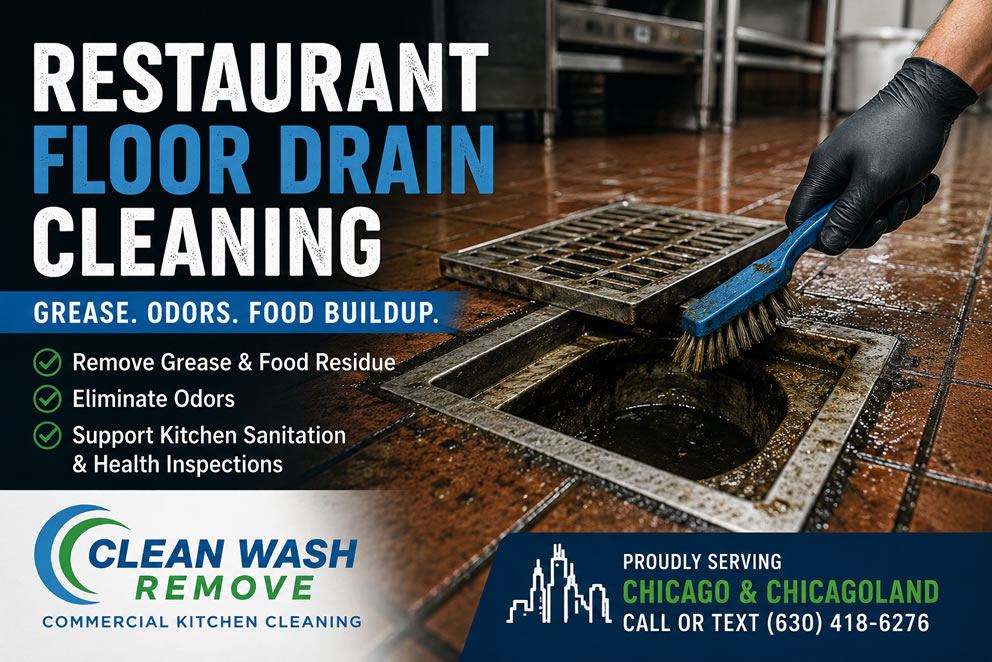
Restaurant Floor Drain Cleaning: Grease, Odors & Food Buildup
Table of Contents
ToggleProfessional restaurant floor drain-area cleaning helps remove grease, food particles, organic residue, and odor-causing buildup from accessible drain surfaces and surrounding commercial kitchen floors.
Restaurant floor drain cleaning is the detailed cleaning and degreasing of accessible drain covers, drain perimeters, surrounding floors, grout, and nearby kitchen surfaces contaminated by grease and food residue.
Why Restaurant Floor Drains Become a High-Buildup Area
Commercial kitchen floors are continuously exposed to cooking oils, airborne grease, sauces, proteins, food particles, wastewater, detergents, and cleaning residue.
During cooking, equipment cleaning, dishwashing, and daily floor maintenance, some of this material migrates toward drainage areas. Grease can adhere to drain covers, flooring, grout, edges, and nearby equipment areas while food particles become trapped within the residue.
Grease Buildup
Cooking oils and airborne grease can create sticky deposits around drain covers, grout, floor edges, and high-use kitchen surfaces.
Food & Organic Residue
Food particles can collect in grease-contaminated drainage zones, creating surfaces that become increasingly difficult to maintain.
Persistent Odors
Moist organic material, food debris, grease, and contaminated surrounding surfaces can contribute to recurring kitchen odors.
What Professional Floor Drain-Area Cleaning Can Address
Effective cleaning focuses on the complete drainage environment rather than treating only the visible drain opening.
What Causes Restaurant Floor Drain Odors?
Restaurant floor drain odors can result from accumulated grease, food debris, organic residue, contaminated drain covers, dirty grout, or buildup on surrounding kitchen surfaces.
Moist organic material can deteriorate and generate persistent odors. Grease can intensify the problem by trapping food particles and other contaminants.
Grease and Food Buildup Create a Kitchen Sanitation Concern
Drainage zones combine moisture, organic material, grease, and frequent kitchen traffic. Neglected residue can become increasingly difficult to remove through routine cleaning.
Detailed sanitation should extend beyond the drain opening to the surrounding kitchen environment.
Drain Perimeters
Remove grease and residue from accessible drain edges, covers, grates, and floor-to-drain transitions.
Tile & Grout
Target grease and food contamination embedded around grout lines and high-use kitchen floor surfaces.
Under Equipment
Address accessible areas beneath fryers, ranges, ovens, preparation equipment, and other grease-producing stations.
Floor Drain Cleaning Supports Health Inspection Readiness
Restaurant sanitation extends beyond food-contact surfaces. Floors, drainage areas, equipment surroundings, walls, and other non-food-contact surfaces contribute to the overall cleanliness of a commercial kitchen.
An inspection-focused kitchen cleaning review should evaluate:
These areas should be incorporated into routine sanitation and periodic deep cleaning rather than addressed only immediately before an inspection.
Why Daily Mopping May Not Remove Heavy Drain-Area Buildup
Daily mopping is essential for restaurant floor maintenance, but heavy grease and embedded residue can remain in difficult-to-access areas.
Drain Edges
Grease can remain around drain perimeters and removable drain components after normal floor maintenance.
Grout Lines
Repeated grease exposure can leave embedded contamination in grout and textured flooring.
Equipment Areas
Fryers, ranges, ovens, and preparation equipment can conceal food and grease residue outside routine cleaning zones.
How Professional Restaurant Floor Drain-Area Cleaning Works
The cleaning process depends on kitchen layout, flooring material, grease levels, equipment accessibility, and surface condition.
Commercial Kitchen Floor Degreasing Targets the Source
Restaurant floor drain cleaning is more effective when combined with broader commercial kitchen floor degreasing.
Cleaning the drain perimeter while leaving nearby flooring contaminated with grease allows residue to return.
How Often Should Restaurant Floor Drain Areas Be Cleaned?
Cleaning frequency should reflect cooking volume, grease production, menu type, kitchen design, and actual buildup.
Daily Maintenance
Remove visible food particles and surface contamination. Clean surrounding flooring and prevent debris from accumulating around drain openings.
Detailed Periodic Cleaning
Inspect drain covers, grout, floor edges, surrounding surfaces, and high-grease areas requiring additional cleaning or degreasing.
Professional Deep Cleaning
Professional cleaning becomes appropriate when routine sanitation no longer removes accumulated grease, embedded residue, or hidden contamination.
Signs a Restaurant Floor Drain Area Needs Deep Cleaning
Restaurant Floor Drain Cleaning vs. Commercial Drain Plumbing
These services solve different problems. Clean Wash Remove focuses on commercial kitchen sanitation and surface degreasing.
| Restaurant Floor Drain-Area Cleaning | Commercial Drain Plumbing |
|---|---|
| Removes accessible grease and food residue | Addresses internal pipe problems |
| Cleans surrounding kitchen floors | Clears internal blockages |
| Cleans accessible drain covers | Repairs damaged plumbing |
| Degreases tile and grout | Diagnoses sewer gas problems |
| Removes surface organic buildup | Addresses backups |
| Supports commercial kitchen sanitation | Restores plumbing function |
Commercial Food Facilities We Serve
Restaurant Floor Drain Cleaning in Chicago
Chicago commercial kitchens can experience significant grease and floor contamination due to high cooking volumes, extended operating hours, compact kitchen layouts, and grease-intensive food preparation.
Clean Wash Remove provides professional restaurant floor cleaning, accessible floor drain-area cleaning, commercial kitchen degreasing, and kitchen deep cleaning throughout Chicago and surrounding Illinois communities.
Service areas include Chicago, Lisle, Naperville, Aurora, Downers Grove, Wheaton, Oak Brook, Schaumburg, Joliet, and nearby Chicagoland communities.
Restaurant Floor Drain Cleaning FAQ
What is restaurant floor drain cleaning?
Restaurant floor drain cleaning removes accessible grease, food particles, organic residue, and grime from drain covers, drain perimeters, surrounding floors, grout, and nearby kitchen surfaces.
What causes restaurant floor drain odors?
Grease, food particles, organic residue, dirty drain covers, contaminated grout, and surrounding floor buildup can produce odors. Plumbing problems can also cause drain odors.
How often should restaurant floor drain areas be cleaned?
Visible food debris and surface contamination should be addressed during routine daily sanitation. Detailed cleaning frequency depends on cooking volume, grease production, menu type, and actual buildup.
Can grease accumulate around restaurant floor drains?
Yes. Cooking grease can accumulate on drain covers, surrounding flooring, grout, edges, and accessible drain surfaces while trapping additional food and organic residue.
Why does a restaurant floor drain still smell after cleaning?
Remaining grease or organic residue can continue producing odors. Persistent odors may also originate from dry traps, sewer gas, internal blockages, damaged plumbing, or other conditions requiring plumbing evaluation.
Does mopping clean restaurant floor drains?
Mopping cleans accessible flooring but may not remove heavy grease around drain edges, grout, drain covers, equipment bases, corners, or areas beneath equipment.
Can dirty floor drain areas contribute to pest activity?
Food residue, grease, organic material, and moisture can contribute to conditions favorable to pest activity. Detailed sanitation removes accessible food sources and supports a broader pest-management program.
Is floor drain cleaning part of commercial kitchen deep cleaning?
Yes. Floor drains and surrounding floors can be incorporated into commercial kitchen deep cleaning along with equipment areas, grease-contaminated floors, walls, cooking areas, tile, and grout.
Does restaurant floor drain cleaning replace plumbing service?
No. Surface cleaning addresses accessible grease, food residue, drain covers, grout, and surrounding floors. Internal pipe blockages, backups, sewer gas, damaged traps, and plumbing failures require qualified plumbing service.
Professional Restaurant Floor Drain Cleaning in Chicago
Clean Wash Remove provides restaurant floor drain-area cleaning, commercial kitchen floor degreasing, grease removal, and professional kitchen deep cleaning throughout Chicago and surrounding Illinois communities.