


Restaurant Self Inspection Guide for Commercial Kitchens
Identify food safety risks, cleaning deficiencies, equipment concerns, and potential health code violations before an official inspection occurs.
What Is a Restaurant Self Inspection?
A restaurant self inspection is a preventive food safety audit performed by restaurant staff to evaluate sanitation, food handling, refrigeration, cooking equipment, employee hygiene, cleaning procedures, pest prevention, and facility maintenance. Regular inspections reduce the likelihood of health code violations, improve inspection readiness, and help commercial kitchens maintain consistent compliance with local health department regulations and food safety standards.
Why Restaurant Self Inspections Are Essential
Health inspectors evaluate conditions that affect food safety, sanitation, and public health. Many violations develop gradually because of inadequate cleaning, equipment neglect, improper food storage, or inconsistent employee practices.
Routine internal inspections identify these conditions before they become official violations. They also help restaurant owners, kitchen managers, executive chefs, and facility supervisors improve sanitation consistency and create a safer environment for employees and customers.
Built for Food Service Operations of Every Size
Any commercial kitchen that prepares or serves food benefits from standardized internal inspections and documented corrective action.
Restaurant Leadership
- Restaurant owners
- Multi-location operators
- Franchise owners
- Food service directors
Kitchen Management
- Kitchen managers
- Executive chefs
- Commercial kitchen supervisors
- Facility managers
Institutional Kitchens
- Hotels and cafeterias
- Healthcare kitchens
- School food operations
- Corporate dining facilities
Restaurant Self Inspection Process
Follow the same sequence during every inspection so that food storage, preparation, equipment, sanitation, facilities, and documentation receive consistent review.
Review Food Storage
Inspect walk-in coolers, freezers, dry storage, shelving, labels, expiration dates, product rotation, and storage temperatures. Confirm that raw food is separated from ready-to-eat food and that products remain covered and protected.
Verify Food Temperatures
Measure refrigerators, freezers, hot-holding equipment, cold-holding units, cooked foods, and cooling foods. Review temperature logs and investigate readings that fall outside established operating procedures.
Inspect Food Preparation Areas
Review prep tables, cutting boards, knives, utensils, processors, mixers, slicers, and scales. Look for food residue, grease buildup, damaged surfaces, and cross-contamination risks.
Evaluate Employee Hygiene
Verify proper handwashing, glove use, hair restraints, clean uniforms, accessible hand sinks, soap, paper towels, and employee illness reporting procedures.
Inspect Commercial Kitchen Equipment
Review grills, fryers, ovens, flat-top grills, steamers, charbroilers, salamanders, and holding cabinets for grease accumulation, carbon deposits, worn components, and damaged surfaces.
Review Exhaust Hood Systems
Inspect the hood canopy, grease filters, grease cups, accessible ductwork, exhaust fans, and hood lighting. Excess grease creates sanitation concerns and increases fire risk.
Evaluate Dishwashing Operations
Inspect the three-compartment sink, commercial dishwasher, sanitizer concentration, water temperatures, air-drying racks, drainage, and dish storage.
Inspect Floors, Walls, and Ceilings
Look for grease buildup, standing water, broken tile, missing grout, mold growth, dust, water damage, peeling paint, and other structural cleanliness concerns.
Inspect Exterior Areas
Review dumpster pads, grease containers, loading areas, exterior doors, waste storage, drainage, and evidence of pest activity.
Document Findings
Record the date, inspector, deficiencies, corrective actions, responsible employees, completion dates, equipment repairs, and cleaning verification.


What to Check in Every Commercial Kitchen Area
Use these inspection categories as a repeatable checklist for management walkthroughs and formal facility audits.
Food Storage
- Correct labels and dates
- Raw food separation
- Covered and sealed containers
- Organized shelving
- Expired product removal
- Safe storage temperatures
Refrigeration
- Temperature logs
- Door gaskets
- Condensation and ice
- Air circulation
- Interior cleanliness
- Drain condition
Cooking Equipment
- Fryers and ovens
- Grills and flat tops
- Steamers and warmers
- Food residue
- Grease buildup
- Carbon deposits
Food-Contact Surfaces
- Cutting boards
- Prep counters and tables
- Knives and utensils
- Containers and bins
- Small equipment
- Cleaning after each use
Handwashing Stations
- Soap stocked
- Paper towels available
- Hot water functioning
- Sink accessible
- Signage visible
- No blocked fixtures
Restrooms
- Toilets and sinks
- Soap dispensers
- Floors and trash cans
- Lighting
- Ventilation
- Overall cleanliness
Pest Prevention
- Rodent or insect activity
- Possible entry points
- Damaged door sweeps
- Food debris
- Standing water
- Waste area conditions
Hood and Exhaust
- Hood canopy
- Grease filters and cups
- Accessible ductwork
- Exhaust fans
- Hood lighting
- Grease accumulation
Facility Conditions
- Floors and drains
- Walls and ceilings
- Tile and grout
- Standing water
- Water damage
- Structural cleanliness
Daily, Weekly, and Monthly Inspection Schedule
A consistent inspection schedule supports continuous compliance and reduces the need for reactive corrections.
- Food temperatures
- Handwashing stations
- Food storage
- Prep surfaces
- Restrooms
- Waste removal
- Equipment inspection
- Floor deep cleaning
- Refrigeration cleaning
- Drain cleaning
- Equipment detailing
- Tile and grout inspection
- Complete facility audit
- Hood system inspection
- Maintenance review
- Pest prevention review
- Documentation audit
- Professional cleaning review
Critical vs. Non-Critical Health Inspection Issues
Critical issues directly affect food safety and require immediate corrective action. Non-critical issues still require attention but generally involve maintenance or facility conditions that present a lower immediate food safety risk.
| Critical Issues | Non-Critical Issues |
|---|---|
| Improper food temperatures | Peeling paint |
| Cross-contamination | Cosmetic wall damage |
| No functional handwashing access | Minor grout deterioration |
| Unsafe food storage | Ceiling stains |
| Sick employee handling food | Worn flooring |
| Improper sanitization | Damaged baseboards |
| Pest infestation | Faded markings |
| Contaminated food-contact surfaces | Minor maintenance items |
Correct critical food safety conditions promptly, document the response, verify completion, and address the operational cause so the condition does not recur.

Common Restaurant Self Inspection Findings
- Grease behind cooking equipment
- Dirty or clogged exhaust filters
- Improper food storage
- Missing food labels
- Unsanitized prep surfaces
- Incorrect sanitizer concentration
- Dirty floor drains
- Standing water
- Overflowing grease traps
- Ice machine contamination
- Damaged refrigeration seals
- Pest activity
- Excessive carbon buildup
- Dirty walk-in coolers
Restaurant Self Inspection Documentation Best Practices
Every inspection should produce written records that support operational accountability, track corrective action, and demonstrate ongoing food safety management.
Measure Your Restaurant’s Health Inspection Readiness
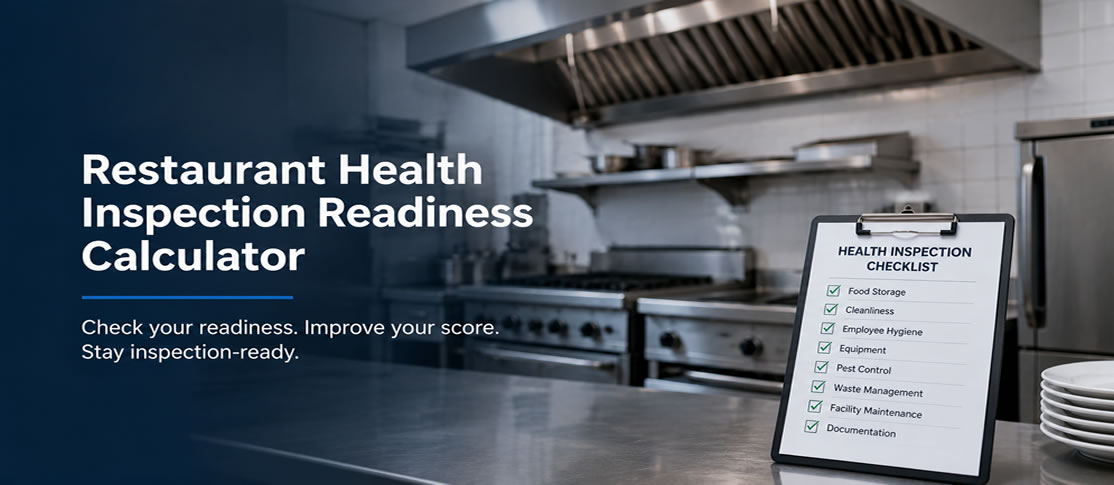
Use the Restaurant Health Inspection Readiness Calculator to review key operational and sanitation conditions, identify possible risk areas, and determine where corrective action may be needed before an inspection.
Professional Commercial Kitchen Cleaning Supports Inspection Readiness
Restaurant self inspections identify sanitation issues, but professional commercial kitchen cleaning addresses many conditions that routine daily cleaning cannot fully resolve.
Deep cleaning removes accumulated grease, carbon, food residue, and contaminants from equipment, floors, walls, hood areas, drains, and hard-to-reach spaces. This work supports long-term sanitation standards and helps management correct recurring deficiencies.
