


Restaurant Sanitation SOP: Commercial Kitchen Cleaning Procedures
Create a documented system for cleaning, sanitizing, inspecting, and maintaining commercial kitchens with consistent procedures across every shift.
What Is a Restaurant Sanitation SOP?
A Restaurant Sanitation SOP is a written set of cleaning and sanitation procedures that defines what must be cleaned, how it must be cleaned, who performs the work, how often cleaning occurs, and how sanitation activities are verified. It creates a repeatable system that supports food safety, operational consistency, and compliance with Illinois Food Code and local health department sanitation requirements.
Why Every Restaurant Needs a Sanitation SOP
Daily employee cleaning alone does not guarantee consistent sanitation. Without standardized procedures, cleaning quality often varies between employees, departments, and work shifts.
A documented SOP establishes measurable cleaning standards that reduce sanitation deficiencies before they affect food safety or health inspections.

Sanitation SOPs for Every Commercial Food Facility
Any commercial kitchen that prepares or serves food benefits from documented sanitation procedures and scheduled verification.
Restaurant Operations
- Full-service restaurants
- Quick-service restaurants
- Fine dining establishments
- Ghost kitchens
- Food trucks
Institutional Kitchens
- Hotel kitchens
- School cafeterias
- Hospital kitchens
- Corporate dining facilities
- Entertainment venues
Specialized Food Operations
- Catering companies
- Food production facilities
- Commissary kitchens
- High-volume food service
- Multi-location operations
What Is Included in a Restaurant Sanitation SOP?
A complete SOP connects daily cleaning, scheduled deep cleaning, preventive maintenance, employee hygiene, inspection verification, and sanitation documentation.
Commercial Kitchen Sanitation SOP Sections
Commercial Kitchen Equipment Cleaning SOP
Document cleaning procedures for fryers, flat grills, charbroilers, ovens, steam tables, salamanders, mixers, meat slicers, food processors, refrigeration units, and ice machines.
- Remove food residue
- Remove grease and carbon buildup
- Apply approved sanitizer where appropriate
- Visually inspect equipment
- Document completion
Food-Contact Surface Sanitation
Apply the highest sanitation standards to stainless steel prep tables, cutting boards, prep sinks, utensils, containers, mixer attachments, beverage equipment, and ice-machine contact areas.
- Remove debris
- Wash and clean surfaces
- Apply approved sanitizer
- Allow required contact time
- Verify before food preparation resumes
Restaurant Floor and Drain SOP
Create a repeatable procedure for floors, grout, corners, cove bases, under-equipment areas, and drains exposed to grease, food particles, moisture, and bacteria.
- Sweep debris
- Apply commercial degreaser
- Mechanically scrub floors
- Clean grout joints and drains
- Rinse and verify dry conditions
Hood and Kitchen Exhaust SOP
Document inspection and maintenance procedures for hood canopies, filters, grease cups, accessible duct areas, and exhaust-fan components.
- Clean hood canopy surfaces
- Maintain filters
- Inspect grease cups
- Monitor grease accumulation
- Schedule professional exhaust cleaning
Refrigeration and Storage SOP
Standardize sanitation and organization for cold storage and dry storage areas.
- Clean shelves and gaskets
- Verify temperatures
- Inspect labels and product rotation
- Remove condensation and spills
- Verify chemical separation and pest prevention
Employee Hygiene SOP
Create consistent hygiene practices for every shift and food-handling role.
- Proper handwashing
- Glove replacement
- Hair restraints
- Uniform cleanliness
- Illness reporting and cross-contamination prevention


Restaurant Sanitation Frequency Matrix
Assign daily, weekly, and monthly responsibilities so every cleaning task has a defined schedule and verification point.
| Area | Daily | Weekly | Monthly |
|---|---|---|---|
| Food-contact surfaces | ✓ | ||
| Cooking equipment | ✓ | ✓ | |
| Floors | ✓ | ||
| Floor drains | ✓ | ✓ | |
| Refrigeration | ✓ | ✓ | |
| Storage shelving | ✓ | ||
| Hood filters | ✓ | ||
| Kitchen exhaust inspection | ✓ | ||
| Commercial kitchen deep cleaning | ✓ |
Restaurant Sanitation SOP Checklist
Daily Cleaning vs. a Restaurant Sanitation SOP
| Daily Cleaning | Restaurant Sanitation SOP |
|---|---|
| Routine housekeeping | Documented sanitation system |
| Employee preference | Standardized procedures |
| Limited verification | Inspection and documentation |
| Basic cleaning | Preventive sanitation management |
| Shift-based tasks | Facility-wide consistency |
Test Whether Your Current SOP Supports Inspection Readiness
Use the Restaurant Health Inspection Readiness Calculator to review sanitation controls, identify possible compliance gaps, and determine which SOP procedures or professional cleaning services may require priority.
Services That Strengthen a Restaurant Sanitation SOP
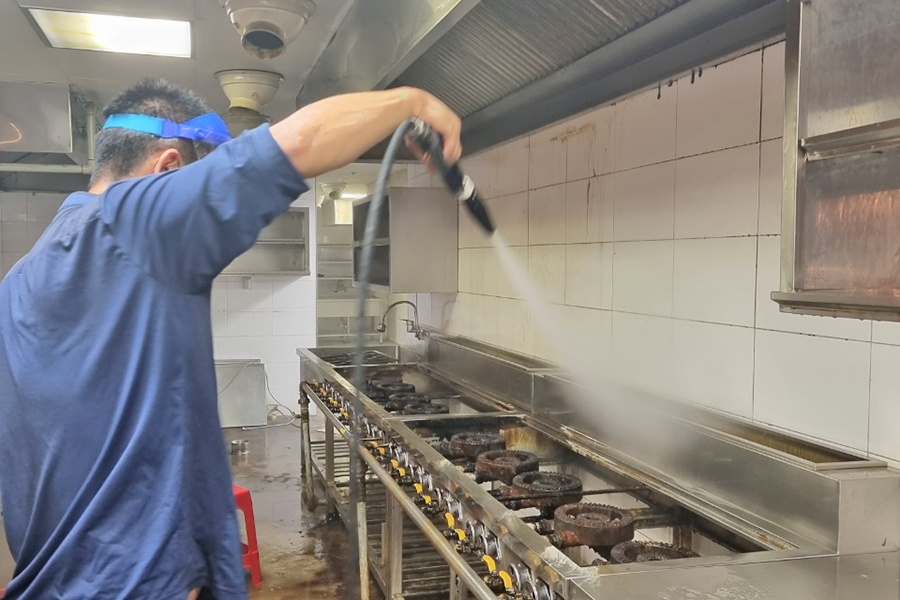
Routine employee cleaning should be supported by scheduled professional services that remove heavy grease, embedded contamination, and residue from areas standard cleaning cannot fully restore.
Standards Supported by a Sanitation SOP
Documented sanitation procedures support food safety, employee hygiene, grease management, cross-contamination prevention, preventive maintenance, and health inspection readiness.
Restaurant Sanitation SOP FAQs
What is a Restaurant Sanitation SOP?
A Restaurant Sanitation SOP is a documented cleaning and sanitation system that establishes standardized procedures for maintaining commercial kitchen cleanliness, food safety, and health inspection readiness.
Why is a sanitation SOP important?
A sanitation SOP creates consistent cleaning procedures, reduces contamination risks, improves food safety, supports health inspections, and establishes accountability across the restaurant.
What services support a sanitation SOP?
Commercial kitchen deep cleaning, restaurant degreasing, hood cleaning, kitchen exhaust cleaning, commercial floor cleaning, refrigeration detailing, equipment detailing, and pressure washing complement routine employee sanitation procedures.
How often should a sanitation SOP be reviewed?
Sanitation SOPs should be reviewed whenever equipment, kitchen layouts, regulations, cleaning chemicals, or operational procedures change and as part of routine preventive maintenance programs.
Does a sanitation SOP replace professional commercial kitchen cleaning?
No. A sanitation SOP guides daily and scheduled employee cleaning, while professional restaurant cleaning services remove heavy grease buildup, deep contamination, and residue from inaccessible areas.