


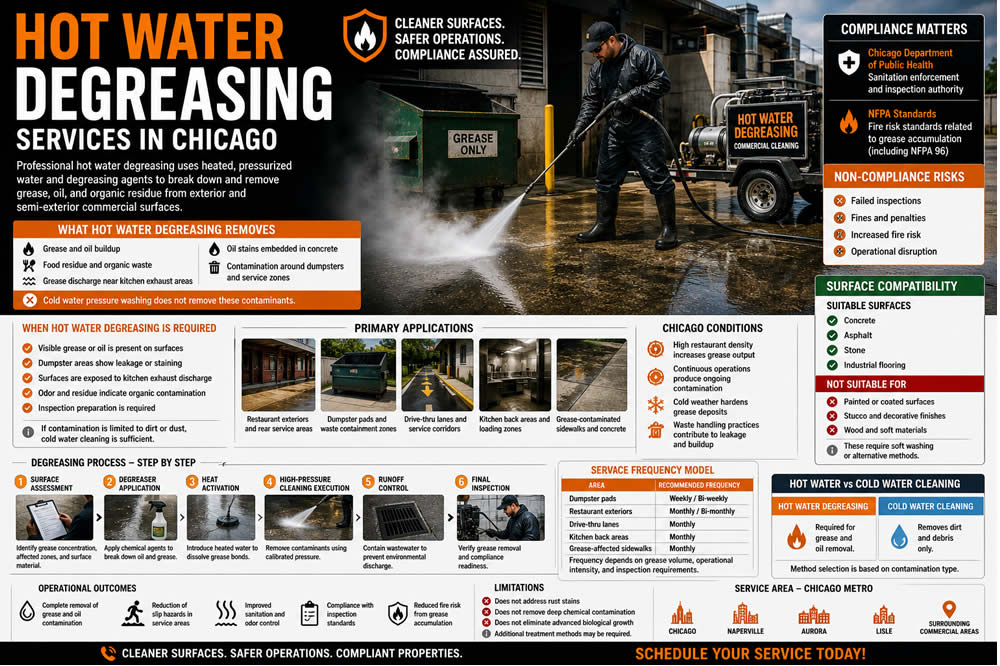
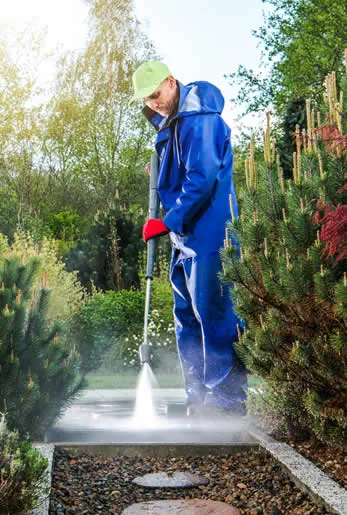
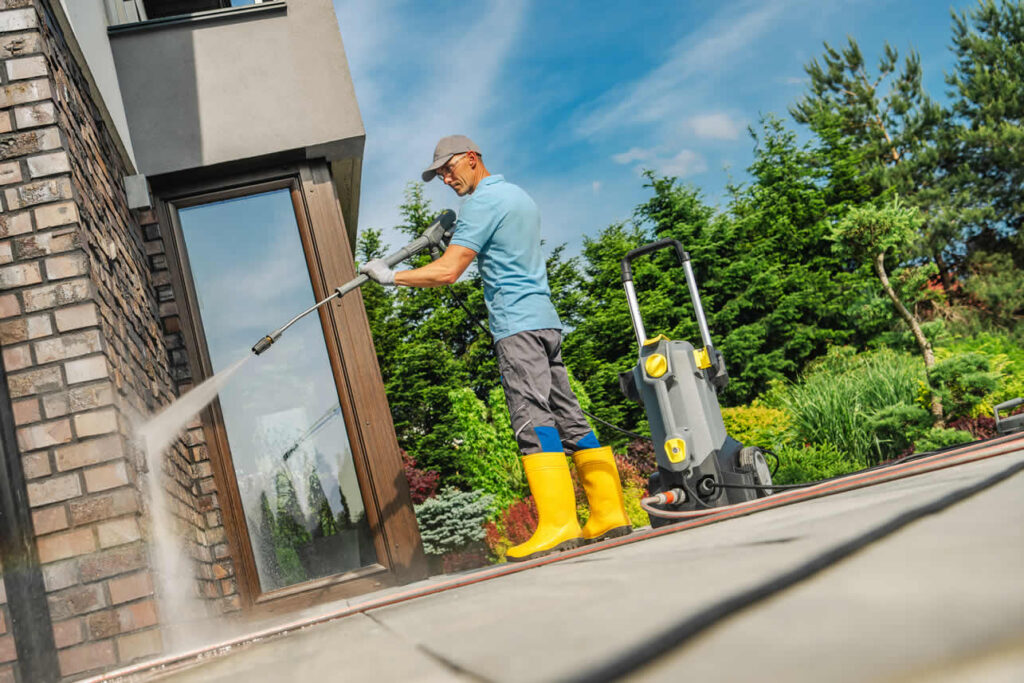
Hot water degreasing is a commercial cleaning method that uses heated, pressurized water combined with degreasing agents to break down and remove grease, oil, and organic residue from exterior and semi-exterior surfaces. Heat is required to dissolve oil bonds, allowing full contaminant removal from concrete and other durable materials.
What Hot Water Degreasing Removes
- Grease and oil buildup
- Food residue and organic waste
- Grease discharge near kitchen exhaust areas
- Oil stains embedded in concrete
- Contamination around dumpsters and service zones
Cold water pressure washing does not remove these contaminants.
When Hot Water Degreasing Is Required
Use this method when:
- Visible grease or oil is present on surfaces
- Dumpster areas show leakage or staining
- Surfaces are exposed to kitchen exhaust discharge
- Odor and residue indicate organic contamination
- Inspection preparation is required
If contamination is limited to dirt or dust, cold water cleaning is sufficient.
Primary Applications
- Restaurant exteriors and rear service areas
- Dumpster pads and waste containment zones
- Drive-thru lanes and service corridors
- Kitchen back areas and loading zones
- Grease-contaminated sidewalks and concrete
These areas accumulate continuous grease exposure and require heat-based cleaning.
Compliance Requirements — Chicago
Commercial properties must maintain exterior cleanliness to meet sanitation and safety standards.
Regulatory context:
- Chicago Department of Public Health — sanitation enforcement and inspection authority
- NFPA — fire risk standards related to grease accumulation (including NFPA 96)
Non-compliance risks:
- Failed inspections
- Fines and penalties
- Increased fire risk in grease-affected zones
- Operational disruption
Hot water degreasing directly reduces these risks.
Chicago Operating Conditions
- High restaurant density increases grease output
- Continuous operations produce ongoing contamination
- Cold weather hardens grease deposits, making removal more difficult
- Waste handling practices contribute to leakage and buildup
Result: frequent degreasing is required to maintain compliance and safety.
Cleaning Method
Hot water degreasing combines:
- Heated pressurized water
- Degreasing chemical agents
- Controlled pressure application
- Runoff containment procedures
Heat activates chemical agents and breaks down grease at the molecular level.
Degreasing Process
- Surface Assessment
Identify grease concentration, affected zones, and surface material - Degreaser Application
Apply chemical agents to break down oil and grease - Heat Activation
Introduce heated water to dissolve grease bonds - High-Pressure Cleaning Execution
Remove contaminants using calibrated pressure - Runoff Control
Contain wastewater to prevent environmental discharge - Final Inspection
Verify grease removal and compliance readiness
Surface Compatibility
Suitable surfaces:
- Concrete
- Asphalt
- Stone
- Industrial flooring
Not suitable for:
- Painted or coated surfaces
- Stucco and decorative finishes
- Wood and soft materials
These require soft washing or alternative methods.
Service Frequency Model
Area | Recommended Frequency |
Dumpster pads | Weekly / Bi-weekly |
Restaurant exteriors | Monthly / Bi-monthly |
Drive-thru lanes | Monthly |
Kitchen back areas | Monthly |
Grease-affected sidewalks | Monthly |
Frequency depends on grease volume, operational intensity, and inspection requirements.
Operational Outcomes
- Complete removal of grease and oil contamination
- Reduction of slip hazards in service areas
- Improved sanitation and odor control
- Compliance with inspection standards
- Reduced fire risk from grease accumulation
Hot Water vs Cold Water Cleaning
- Hot water degreasing
Required for grease and oil removal - Cold water cleaning
Removes dirt and debris only
Method selection is based on contamination type.
Limitations
Hot water degreasing does not address:
- Rust stains
- Deep chemical contamination
- Advanced biological growth
Additional treatment methods may be required.
Service Area
Coverage includes:
- Chicago
- Naperville
- Aurora
- Lisle
- Surrounding commercial areas
FAQ
Why is hot water required for grease removal?
Heat breaks down oil bonds, allowing grease to dissolve and be fully removed.
Is hot water degreasing required for restaurants?
Yes. Food service environments require grease removal to maintain sanitation compliance.
Can cold water pressure washing remove grease?
No. Cold water cannot dissolve oil-based contamination.
How often should dumpster areas be cleaned?
Weekly or bi-weekly, depending on grease accumulation.
Does degreasing reduce fire risk?
Yes. Removing grease reduces the likelihood of ignition in contaminated areas.
We Proudly Serve Naperville
TESTIMONIALS
EXCELLENTTrustindex verifies that the original source of the review is Google. Brad and his team were fantastic Great job they were fast and on time Thanks ScottPosted on GoogleTrustindex verifies that the original source of the review is Google. Amazing job cleaning the hood and restaurant!! the place looks BRAND NEW :) and the price was so much better than any of the competition.!! Thank you Brad!Posted on GoogleTrustindex verifies that the original source of the review is Google. They Did an Amazing job Pressure washing the exterior of the building and parking Lot!!!! Brad is an amazing guy to work with :)Posted on GoogleTrustindex verifies that the original source of the review is Google. High quality work with attention to detail. Easy to work with and schedule.Posted on GoogleTrustindex verifies that the original source of the review is Google. Great guys very professional !!!Posted on GoogleTrustindex verifies that the original source of the review is Google. Wasn't too happy with my last hood cleaner. Brad came in, gave me a quote, two days later did the job! Felt like the last company was getting comfortable, rushing and not focusing on the little details. Not these guys! Thank you BradPosted on GoogleTrustindex verifies that the original source of the review is Google. Hey, these guys did a great job with my kitchen stove! I highly recommend you all check them out if you’re looking for good work!
Want to Contact with us?
Frequently Asked Questions
What is power washing?
Power washing uses high-pressure water to clean surfaces like driveways, decks, siding, and patios. It removes dirt, mold, algae, and grime that regular cleaning can’t.
What surfaces can you power wash?
We safely clean wood decks, concrete driveways, brick, stone, siding, fences, and more. Almost any exterior surface can be restored with professional power washing.
Is power washing safe for my home?
Yes! Our team uses professional-grade equipment and techniques tailored to each surface. We remove dirt and mold without causing damage.
How often should I power wash my property?
Most homes benefit from power washing once a year. High-traffic areas or homes in humid climates may need it more often to prevent mold and stains.
How long does a power washing job take?
The time depends on the size of your property and the surfaces being cleaned. Most residential jobs are completed in a few hours, while larger properties may take a full day.
Are your services eco-friendly?
We use environmentally safe cleaning solutions whenever possible. Our methods are designed to protect plants, landscaping, and surrounding areas.
How do I schedule a power washing service?
You can call us or request a quote online. We’ll schedule a time that works best for your home or business and make the process easy and stress-free.